
Tampa Mediator for Business & Real Estate Disputes
If you are involved in a civil dispute in Florida, the court may require you to attend mediation. As both an experienced attorney and a certified Circuit Civil mediator, Jeffrey Lieser brings the benefit of both formal mediation training and skilled legal insight to every mediation session. Jeff harnesses his natural empathy, honed people skills, and ability to remain impartial to help parties to resolve even the most contentious and complex disputes.
Jeff’s Mediation Philosophy
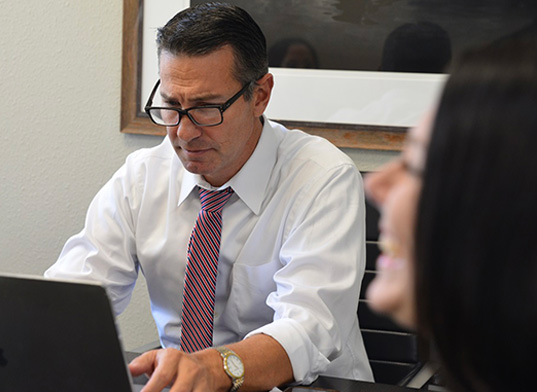
A successful mediator is someone who has a specific skill set that allows them to bring opposing sides together and find a solution to even the most contentious dispute. While mediation training can certainly help to hone those skills, they tend to come naturally to an effective mediator. Jeff gets a deep sense of satisfaction from helping people resolve disputes that allow them to put what is often an extremely stressful time in their life behind them.
Jeff understands that the cases he mediates are not always just about money. Sometimes what is at stake is a family business that has been passed down for generations. It can be very fulfilling to be able to bring peace to people who have so much on the line and who have often been embroiled in the legal system for a significant amount of time.
By way of illustration, consider a case that Jeff mediated that had been slowly making its way through the legal system for years. Although the intense animosity between the parties consistently threatened to derail the negotiations during mediation, Jeff stayed calm, repeatedly bringing both parties back to the core issues, and continued to slowly chip away at the issues. After weeks of additional mediation sessions, calls and emails, Jeff managed to facilitate a settlement agreement.
For Jeff, being a mediator comes naturally and he genuinely enjoys helping people through what is often an emotionally demanding and financially uncertain time for them.
What Is Mediation?
Mediation is a type of Alternative Dispute Resolution (ADR) that involves a confidential, structured negotiation process facilitated by a neutral third party known as a mediator. In the State of Florida, there are five different types of mediators that can be certified by the Florida Supreme Court, including County, Family, Circuit Civil, Dependency, and Appellate mediators. As a certified Circuit Civil mediator, Jeff is qualified to mediate County Court cases involving disputes with $50,000 or less in controversy as well as Circuit Court cases, involving disputes where more than $50,000 is in controversy.
In Florida civil circuit cases, the parties may voluntarily agree to engage in mediation or the court may order mediation pursuant to Florida Rules of Civil Procedure. Civil Circuit Court mediators handle a wide variety of civil disputes, including complex commercial litigation, contract disputes, business conflicts, real property matters, construction claims, professional liability cases, and other high-value civil actions.
Unlike a judge during a trial, a mediator does not rule on legal issues and does not impose a decision on the matter in dispute. Instead, the mediator remains neutral while guiding the parties toward a voluntary resolution. The participants in mediation ultimately control the outcome and while the goal is to reach an agreement, there is no requirement that the mediation result in a complete resolution of all issues. If an agreement cannot be reached, the parties reserve the right to move forward with traditional litigation.
A mediator acts as a facilitator, assisting the parties with communication, identifying strengths and weaknesses in each side’s position, and exploring potential settlement options. As a practicing attorney himself, Jeff understands the risks inherent in litigation as well as the evidentiary and procedural hurdles that parties face if they are unable to reach an agreement through mediation. That invaluable legal insight allows Jeff to help parties to realistically assess their positions and bridge the gap between competing demands, increasing the likelihood of a mutually beneficial resolution.
Mediation Specialties
While pursuing a resolution of your dispute through traditional litigation always remains an option, the benefits of mediation should not be ignored. Whether you have voluntarily agreed to mediation or the court has ordered you to participate, it is helpful to understand the numerous advantages mediation offers so that you can make the most out of the process. Benefits of mediation include:
- Control Over the Outcome:With traditional litigation, a judge or jury has final decision-making authority, and the outcome is never guaranteed. In mediation, you maintain control and you decide whether to settle your dispute and the terms of that settlement.
- Confidentiality: Under Florida law, mediation is confidential (subject to just a few, rare exceptions), meaning that anything that occurred during settlement negotiations cannot typically be used against you should the matter return to court. This facilitates open discussions and encourages the parties to explore creative solutions.
- Cost Efficiency: Mediation can resolve a dispute before costs for discovery, expert witnesses, and trial preparation are incurred which can dramatically reduce the overall cost of resolving the dispute.
- Faster Resolution: Civil circuit cases in Florida often take years to reach trial. Mediation offers the opportunity to resolve your case in a single day or a series of sessions.
- Preservation of Relationships: Whether your dispute involves probate, real estate, or business, the underlying relationship between the parties may be important. Mediation offers the opportunity to reach a mutually agreeable settlement that may is more likely to preserve professional or family connections than adversarial litigation.
What to Expect with Jeffrey Lieser as Mediator
Every legal matter involves a unique set of facts and circumstances, and every mediator approaches their role in a unique way. Knowing what to expect with Jeffrey Lieser as your mediator helps you to make the right choice when selecting a mediator and ensures that you are properly prepared for your mediation session, decreasing stress and increasing the likelihood of a positive outcome.
- Court Order or Voluntary Agreement. The first step in mediation is either a mutual agreement to participate or a court order referring the case to mediation.
- Selection of the Mediator. The parties usually mutually agree on a mediator.. Choosing Jeffrey Lieser as your mediator ensures that you have someone who understands the law and the litigation process. Jeff also has both the professional experience necessary to understand complex, high-value financial issues and the real-world experience needed to identify any non-financial issues that need to be resolved to reach an agreement.
- Scheduling and Pre-Mediation Preparation. Jeff will coordinate with all parties to set up a convenient mediation schedule. He also encourages parties to provide him with relevant documents and a confidential mediation statement outlining the facts, legal arguments, procedural posture, and settlement history well in advance of the scheduled mediation. This helps Jeff to better understand the issues and the position of each party, leading to a more efficient and effective mediation session.
- Opening the Mediation Session. Jeff usually begins mediation with a joint session where all parties, along with their respective counsel, are present. One of Jeff’s many strengths as a mediator is knowing when to separate the parties into private caucuses and working with the parties individually.
- Caucus Sessions. Jeff will move between the parties, discussing strengths and weaknesses of each side, facilitating negotiations, and conveying proposed settlement terms. These are confidential meetings in which Jeff may ask pointed questions designed to make each party evaluate risks and prioritize goals. As a practicing attorney, Jeff excels at providing an impartial analysis, helping the parties anticipate what could happen if the case proceeded to trial
- Negotiation. Mediation typically involves a lot of back-and-forth negotiations, facilitated by Jeff. Jeff tries to narrow down issues, reaching agreements on less contentious issues or terms early on when possible, allowing him to identify and focus on any remaining barriers to settlement. Jeff urges parties to trust the process and not “throw in the towel” too early. Sometimes, adjourning and returning for future mediation sessions is necessary to fully resolve all issues. In other cases, it may be impossible to reach a full settlement, but even a partial settlement benefits the parties.
- Settlement Agreement. If the parties reach an agreement (partial or full), the terms are reduced to writing before the mediation concludes and each party signs the agreement. If the parties cannot reach an agreement on any of the disputed issues, the case returns to court for further proceedings.
Call us if you have potential mediation in these areas: